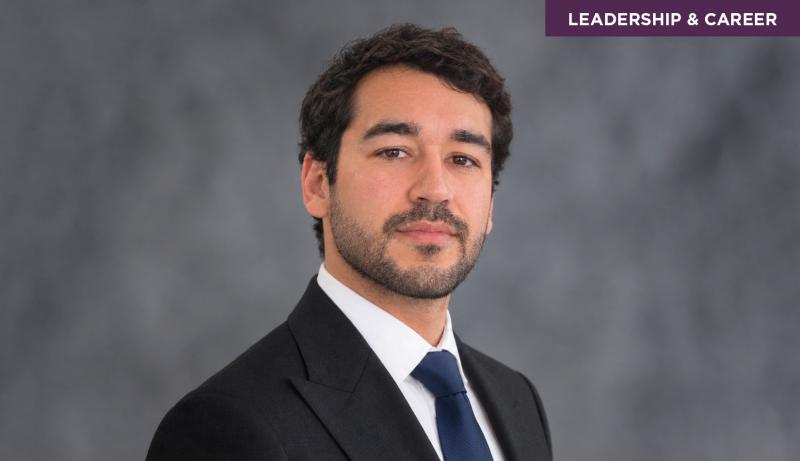
Like many treasurers, David Vargas didn’t start his career in treasury. After completing a Bachelor of Business Administration in Barcelona, Spain, he spent almost two years at a bank as a cash management and liquidity corporate banking analyst. The role involved forming close working relationships with treasury, something that opened his eyes to this side of finance. When an opportunity arose with the treasury function as liquidity management analyst based at infrastructure operator Ferrovial in Madrid, Vargas took the plunge.
“I had never thought about being in treasury. In banking, people like to do mergers and acquisitions, they like to do equity research. But you're also doing cash management and some treasury, and you can start to see your strengths. In my case, I'm a very detail-orientated person. I think if you like to do things in a very organised way and if you really like dealing with bank relationships with finance teams, then treasury is a good place to develop your career.”
Vargas’ view is that experience in the workplace is richer when complemented by structured learning. He embarked on the Certified Treasury Professional (CTP), run by the Association for Financial Professionals (AFP). The biggest blocker for most treasury professionals, as he acknowledges, is time. He dedicated at least four nights a week to study: “It's a sacrifice that you have to make,” he explains. “I tried to put in at least one and a half to two hours per day.” In doing so, Vargas completed the CTP within a self-imposed deadline of four months.
Having gained the CTP, Vargas moved on to the ACT's Certificate in International Cash Management (CertICM). Holders of the CTP can apply directly, without first taking the Award in International Cash Management. He describes the two bodies' qualifications as "complementary, not competing".
Writing on LinkedIn, he sets out what each brings: "The CTP forces you to master the mechanics that keep a corporation liquid: cash positioning and forecasting, payment systems and clearing infrastructures, bank relationship management, short-term investing and borrowing, FX and interest rate risk, and the internal controls that protect it all."
The ACT's cash management track, he writes, "goes deeper into the international dimension: cross-border liquidity structures (cash pooling, in-house banks, netting), managing cash across regulated and restricted markets, bank account rationalisation, and the technology stack, from TMS platforms to API-based connectivity, that modern treasury runs on." He expects to sit the exam late in 2026 or early in 2027.
Key to grasping the more complicated aspects was, says Vargas, putting theory into practice as soon as possible. “I tried not to memorise it, but to really understand it and try to find an analogy between the things I had been learning and the things that I was actually doing in my job. That really helped me.”
It really gave me trust in myself as a certified treasury professional, because I have put a lot of time and hours into my studies
Not one to rest on his laurels, Vargas then plans to start the Diploma in Treasury Management (AMCT). “It represents the strategic tier of the profession: not just managing cash, but advising on capital structure, funding, and enterprise-level financial risk,” he says.
Vargas says the structured path gave him visibility of all the tasks undertaken by treasury, on a global scale. But the most impactful part has been internal: “It really gave me trust in myself as a certified treasury professional, because I have put a lot of time and hours into my studies. In terms of the future, I think it's something that really opens doors.”
Vargas describes the treasury community as “like a family”, “really vocational” and it’s clear: treasury is where he has found a home.
Alex Gray is editor of The Treasurer