
The past year has tested the skills and resilience of local treasurers yet again, with volatility, supply chain disruption, uncertainty and challenges in many forms.
At last year’s Middle East Treasury Summit, treasurers were already taking steps to strengthen resilience, and our discussions covered many relevant topics, including stress testing, robust liquidity management, cybersecurity measures, solutions for trapped cash and technology adoption. In case you missed it, there was a remarkably forward-looking article based on interviews with local treasurers, Middle East treasury teams hunt opportunities, published in the September 2025 edition of The Treasurer.
After the events earlier this year, the initial concerns of many companies in the region were around the disrupted supply chain and the impact on local commerce. Businesses more exposed to travel, hospitality and logistics have felt the brunt of the disruption. Across the broader economy, higher energy prices, shipping costs and insurance premiums have fed directly through to import costs and inflation, which many firms had to absorb in margins.
Certain assumptions have also been tested, such as where data is stored. Local data centres were viewed as relatively safe until they were disrupted in early March, requiring significant time to restore and bring back online, which in some cases impacted the availability of local banking services and payments.
The companies that can adapt will prosper. Those that cannot will struggle
Despite the challenges, sentiment on the ground has been highly resilient. Governments stepped in quickly with support packages for the economy, and banks have continued to lend and maintain their balance sheets.
Across all companies, processes have been reviewed, contracts amended and new supply routes established. There has been a notable shift towards local sourcing, manufacturing and food security, directly benefiting companies in these sectors. People are starting to factor disruption into forecasts and financial decisions, and to bring in more safeguards against tail-risk events. Like anything, there are opportunities as well as challenges, and companies with the dry powder to take a long-term view are well placed to act.
Transformation has been at the core of this resilience. For example, technology and AI are overhauling how we work and approach the day-to-day: whether through data analytics, liquidity management, automation or report drafting, productivity enhancements are certainly evident. Using these tools is no longer optional; it is part of the standard toolkit now, with the ability to question, evaluate and synthesise being the new norm. Looking ahead, the key is how quickly organisations can turn that adoption into advantage. The companies that can adapt will prosper. Those that cannot will struggle.
There is a real sense this year of people wanting to gather – treasurers, bankers and the wider industry – to share experiences and navigate the next phase together. Learning from and supporting each other is so important. With the ACT, individuals can boost their skills through MicroCredentials, a flexible, modular route to a full qualification. Affiliate membership has also been growing in this region, and the new members-only sessions and networking receptions make being a member, and not just a visitor, even more valuable.
Resilience got us through the year; turning it into opportunity is the conversation I am most looking forward to in Dubai
As the Summit approaches, most of us will be thinking about what the new norm will be. But the toolkit of treasurers remains the same: planning for these unexpected events, making sure we have enough headroom and liquidity buffers, making sure we can adapt quickly, and asking the question: What can go wrong? I think that's just become part of the daily mindset now.
We live in a world where change and so-called black swan events are increasingly common. But disruption will close some doors and open others, creating new opportunities for the companies ready to adapt and take bold decisions. Resilience got us through the year; turning it into opportunity is the conversation I am most looking forward to in Dubai on 22–23 September.
Hope to see you there!
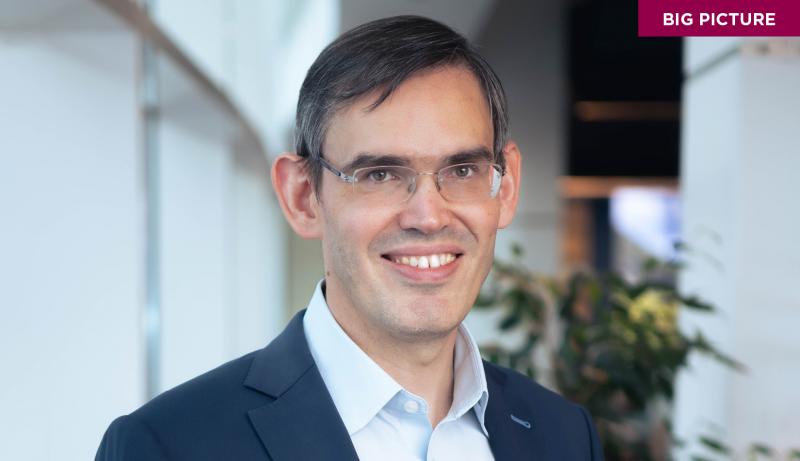
James Adams is group treasurer at AW Rostamani Group and chair of the ACT Middle East Advisory Panel