Three different experts, wide global experience, but one common plea – as soon as a merger or acquisition appears on the horizon, well before day one, the treasurer must be in the room.
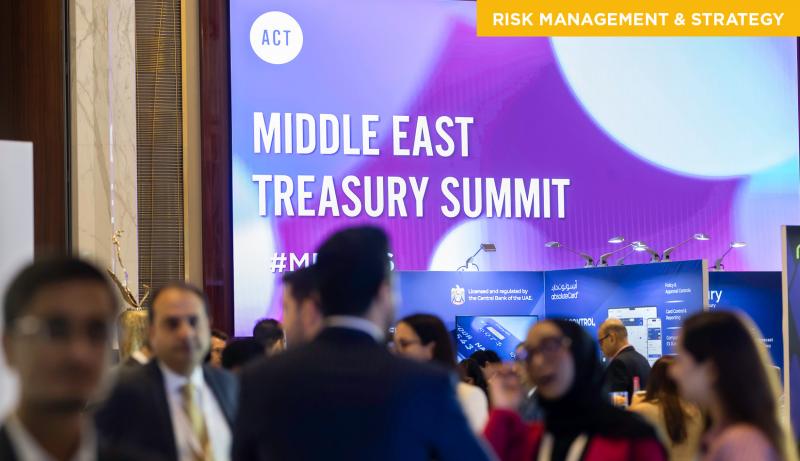
Coming together at the Association of Corporate Treasurers Middle East Treasury Summit in Dubai were Nader Aboushadi, group chief treasurer at Sidara, Haseena Khodadin, partner at EY specialising in global treasury services, and Sonia Pavoncelli, head of cash management for the UAE at BNP Paribas. The session was chaired by Kay French, founder and CEO of Investory.
For Nader Aboushadi, the situation is quite simple: “It's only your fault if you do not put up your hand early on and say, we need to be part of this. Otherwise, you're going to be dealing with consequences, rather than structuring the transaction.” If you're not given access to the boardroom at the beginning, he adds, you end up with “a problem on your hands”.
Aboushadi drew directly on his experience when Sidara acquired the UK-based John Wood Group in March, a complex, high-profile transaction taking nearly two years to complete. The initial offer price was cut and Sidara committed to a US$450m cash injection to keep Wood afloat. Explaining the importance of treasury having an upfront role, Aboushadi said:
“The company was pregnant with about $3bn of debt and having cash-flow issues for the better part of the past decade. So, early on, we put our hands up as treasury and said, unless we get the banking right from the beginning, we should not do this. And we got ourselves into the room early on. We negotiated an amend-and-extend for a period of 24 months on the transaction for the full suite of financial instruments that were on the book of the target. And that was a critical CP [condition precedent] for our board for execution of the transaction.”
If you don't have that proactive treasurer, you will always be on the back foot
Haseena Khodadin has advised on many carve-outs and has seen the difference when treasury comes late into the game. In one case it meant not being able to close in one country. “It really has certain impacts, because treasury needs to be involved.” It’s often down to the perception of treasury, she adds. In some organisations, the treasurer is strategic adviser to the CFO and therefore finds it easier to get a place in the boardroom, but, in others, treasury is still seen as a back-office function: “And in those cases you see that it often goes wrong, or you actually squeeze your organisation in a stress scenario to get it done.”
The biggest risk in any carve-out transaction, she says, is to not be able to continue your operations on day one. “To do that you need the treasurer by your side, because if that's not the case and he does not understand what actually needs to happen, you will have a problem with your working capital.”
Another problem comes when every M&A workstream is working to the same deadline: “For example, if the treasurer has the same timeline for day-one readiness as legal has to close their documents, you need the legal documents to be finished in order to do some operational things.” Her solution is sequenced timelines that reflect the interdependencies between workstreams.
The banks welcome clarity from the very beginning of a deal, and that involves treasury, says Sonia Pavoncelli: “When the bank is called earlier, and I'm talking about the cash management business lines, we can clearly ensure the closing-date execution and the business continuity on day one.”
Given advance warning, Pavoncelli says, banks will be ready for the closing day, including: understanding the impact on treasury systems, such as the ERP and TMS; preparing processes for payments; and advising on the best setup for the treasury, given its new responsibilities.
Pavoncelli said clients face an early choice. A 'lift and shift' brings the target's existing cash-management structure across as it stands, for speed of integration. A 'whiteboard' approach designs and implements a new cash-management and treasury system first, then optimises it.
But after closing, when information is not forthcoming, integration projects can drag. There can be a connectivity gap, when the complexity of moving from a legacy system to a new connectivity system is underestimated. Even basic paperwork can be neglected: “You can imagine recertification of addresses of legal entities across different jurisdictions, taking into account local regulation, which is also changing over time.”
Asked what changes they would like to see when they're thinking about M&A, each panel member came back to treasury.
For Khodadin, it’s the need for an energetic treasurer: “If you don't have that proactive treasurer, you will always be on the back foot. Because people's minds are simply not there when it comes to closing deals. And if that mind shift changes, I am sure that the treasurer will come very early in that stage. Because you don't want an organisation or a deal that looks fantastic in the newspapers, but at the end struggles significantly.”
Aboushadi stresses that treasurers must not forget the basics, even deep into a complex deal: “There are a lot of different things that can postpone and deter, but definitely cash is number one. Keeping your eye on that and the visibility of it. Second to that then, of course, debt, contingent liabilities, all of that – the most important is always cash.”
The banks, too, want treasury at the table throughout the transaction: Pavoncelli suggests “to move to a model where the client is calling the bank a little bit earlier, to structure together the deal and to ensure the closing execution. We understand that, so far, the treasury has been considered more execution function, but probably it has to be considered more as a partner in transformation for the deal.”
Nick Walshe is a journalist based in Dubai.