Treasurers have always been important, but since becoming chief executive of the ACT two years ago, I have come to realise treasurers truly are the unsung heroes of business. We are working hard to improve this recognition.
Treasurers are, by nature, pragmatic people, quietly and efficiently getting on with the things that need to be done. Much of this isn’t always visible, sometimes not even to colleagues within your own organisations. When treasury is working well, cash flows, capital works, risks are managed, decisions are informed and business carries on.
What changes that dynamic, every time, is risk. Whenever there is a crisis or a period of heightened uncertainty, the treasurer’s role suddenly comes into sharp focus. We’ve seen that repeatedly in recent years: during the pandemic, through major geopolitical shocks and, more recently, with the uncertainty around tariffs and the rapid shifts in policy following ‘Liberation Day’ in the US last year. In moments such as these, organisations very quickly rediscover how critical it is to understand their financial position, their exposures, and their ability to keep operating and thriving.
I am incredibly proud of how calmly and professionally treasurers have responded. Many ACT members have told me, with understatement, that they have had “a few more summons to the boardroom” to explain what’s going on and how the organisation is responding. That’s treasury at its best: providing clarity, judgement and confidence when others need it most.
I often describe crises as risks that have become real – but they are also opportunities for businesses to better understand the value of specialist treasury skills and for treasurers to demonstrate the breadth of what they bring. My hope is that this recognition does not peak during a crisis and then fade away, but, instead, becomes a sustained understanding of treasury as a profession in its own right.
That’s treasury at its best: providing clarity, judgement and confidence when others need it most
This leads naturally to the question of qualifications. We are operating in a world where risk is no longer abstract. It materialises quickly and, often, unexpectedly. In that context, having a deep understanding of the principles behind what you are doing as a treasurer really matters. Qualifications provide that grounding, they give you confidence not only in the technical mechanics, but in your ability to make sound judgements when there is no obvious right answer.
But technical expertise alone is not enough. Treasury is fundamentally about communication. At the ACT, we describe the combination of technical knowledge and broader leadership skills as professionalism. One clear and well-established way to demonstrate that professionalism is through a qualification. It shows that you have put yourself through the discipline of learning the fundamentals and that you know how to apply them in practice.
There is also a very practical reality. Treasury, like many professions, operates in a competitive labour market. An ACT qualification helps individuals stand out. It signals depth, credibility and commitment in a way that is immediately recognisable.
Beyond the qualification itself, there is something even more enduring. When people begin their qualification journey with the ACT, they do not always realise that they are joining a community that will support them not just for months or years, but for decades. In times of crisis especially, having a trusted network of peers to problem-solve with can be the difference between feeling isolated and feeling supported.
I strongly believe that standing still is not an option
I strongly believe that standing still is not an option. If you stand still, you are going backwards as the world keeps moving on. New generations of treasurers learn differently, and they expect flexibility, digital access and agility, not just in their careers, but also in how they acquire skills. The challenge for the ACT was how to modernise learning while preserving the rigour and credibility that come with being a Royal Charter body.
That is why we introduced MicroCredentials. In practical terms, this means ACT qualifications can now be studied in genuinely bite-sized modules, almost always online. Learners can choose the order, pause and restart as needed, and focus on the topics that are most relevant to them at that moment. They are in the driving seat.
Crucially, this flexibility does not mean dilution. The breadth, depth and academic standards of the curriculum remain unchanged. If you complete all eight modules of the Certificate in Treasury through MicroCredentials, you will have covered exactly the same content – to the same standard – as someone who follows the traditional route (and by the way, the traditional route remains available, too).
Alongside this, we are preparing to launch the UK’s first dedicated treasury apprenticeships. Treasury has now been formally recognised as a distinct profession and, from summer 2026, employers will be able to bring new talent into the profession at a much earlier stage. I find it incredibly exciting to think about a future generation of treasurers who qualify through structured, professional pathways from the very start of their careers.
For those entering the profession today, working with AI will simply be normal
Technology is an unstoppable force. AI is the most talked-about example, but it is really just the latest chapter in a long story of technological change. For those entering the profession today, working with AI will simply be normal.
There are risks, of course. We are still in the foothills when it comes to issues such as data security, governance and AI ‘hallucinations’. But the benefits are real and are here to stay.
As automation takes over routine tasks, what becomes more valuable are the things that only humans can do well – for example, critical analysis, lateral thinking and judgement. Machines can present options, but humans still decide which path to take.
Just because something can be done does not always mean it should be done
Human connection also matters, such as sense-checking decisions with peers by asking: “What is your system telling you? How did you handle this? What am I missing?” I hear these conversations happening at ACT events, and they will only become more important.
This is also why we have modernised access to the ACT’s deep resources through the introduction of our Affiliate Membership scheme. You may have team members or colleagues in other finance roles who are playing an active role in treasury in your organisation and could benefit from such access, as well as the network that membership can provide. Affiliate members become part of our growing dynamic global community of treasury and finance professionals in more than 80 countries, and have the opportunity to get involved with our efforts to raise the profile of the treasury profession on an international level.
Then there is ethics. Every ACT member signs an ethical code, and I am increasingly convinced that ethical judgement will be one of the defining human skills of the future. Just because something can be done does not always mean it should be done. Navigating that space requires professional judgement, not just algorithms.
For all these reasons, I am optimistic. Technology does not diminish the role of treasurers – it elevates it.
More organisations, including smaller and more complex ones, are recognising the need for specialist treasury expertise. I often say if you really want to understand ‘what business thinks’ speaking to treasurers is a very good place to start.
In a world of constant change and persistent risk, professional treasury has never been more important – and I believe the quiet heroes of the past are finding their voice.
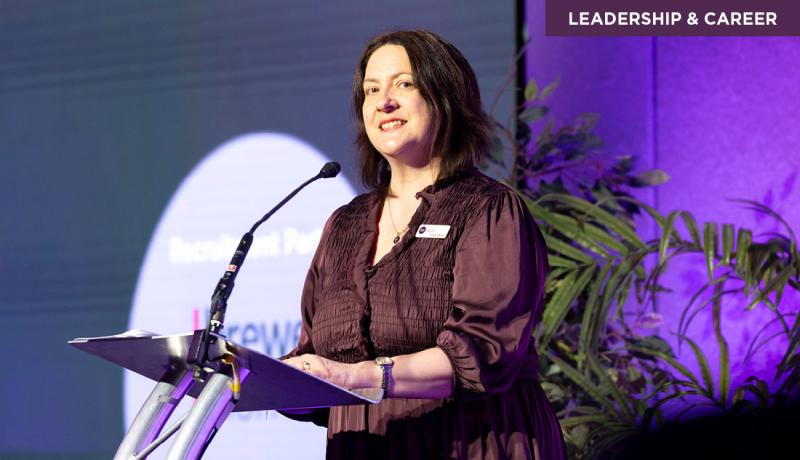
Annette Spencer is chief executive of the Association of Corporate Treasurers