
For Hammerson, resilience has not been a buzzword – it has been a necessity. As a UK FTSE 250 real estate investment trust operating in a retail market reshaped by COVID, structural change and ongoing volatility, Hammerson has had to rethink its portfolio and financing strategy.
So, when the company issued its €350m bond in October 2025 – an issuance that won the ACT’s Deals of the Year 2025 award for bonds below £1bn – it was not a reactive move. Instead, it reflected a deliberate strategy of preparation, flexibility and disciplined execution.
“In 2024, we invested time into creating a Euro Medium-term Note [EMTN] – the first time in Hammerson’s 84-year history – so that we could act quickly should the right conditions arise,” says Richard Sharp FCT, Hammerson’s group treasurer. That decision proved critical, with a €700m bond maturing in 2027.
Hammerson had historically relied on standalone issuances, but in a volatile market, speed matters. By putting an EMTN programme in place and maintaining it through regular updates – even when it required significant internal effort – treasury ensured the business could seize a narrow market window.
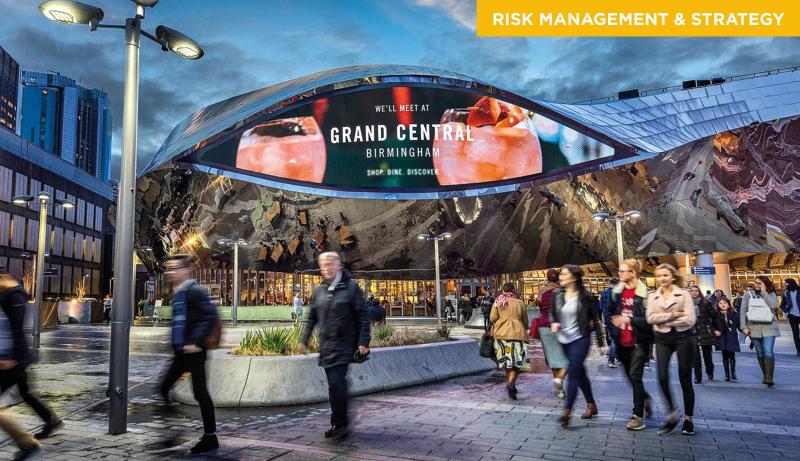
That window opened shortly after a series of strategic moves strengthened the company’s credit profile. Asset repositioning, acquisitions such as buying out JV partners in Birmingham’s Bullring and Grand Central retail properties, and an equity raise combined to improve leverage metrics and investor confidence. The result was an upgrade from Fitch and a positive outlook from Moody’s, reinforcing market momentum.
Preparation alone was not enough, however. Execution required flexibility across multiple fronts – from managing documentation and board approvals to engaging with rating agencies and investors, often in parallel.
“We managed to do so, kicking those off in early August,” Sharp explains, so that they could be ready by about the first week of October. Meeting that timeline allowed Hammerson to benefit from strong market conditions and minimal competing supply. In hindsight, that timing was decisive. “We brought planned issuance forward six months… I would not have wanted to be in the markets at the moment,” he says.
I think COVID taught us… to take the opportunity from the markets as and when conditions are optimal
The strength of demand – with the book peaking at more than €1.6bn – reflected both the improved credit story and investor confidence in the company’s strategy. For treasury, it also validated a broader lesson: resilience comes from readiness, not prediction.
“I think COVID taught us… to take the opportunity from the markets as and when conditions are optimal,” Sharp notes. That mindset extended to managing risk within the transaction itself. Faced with potential intraday volatility, the team implemented a bespoke hedging approach to lock in pricing early in the process.
It was this ‘basis swap lock’ that caught the eye of the Deals of the Year judges, who commented on “the innovative hedging that combined the features of a spreadlock with a basis swap”. They also praised the team for “managing a complex sequence of events to great effect in a tough market sector”. As Sharp says: “It comes back again to volatility.”
More broadly, the deal highlights how treasury can directly support business resilience. The financing not only reduced refinancing risk, but also provided flexibility over future funding decisions, supported by strong liquidity and access to markets.
“We didn’t issue on the basis of predicting events,” Sharp says. “But the current volatility underlines the importance of acting decisively when conditions are favourable. And it requires investing time in the important things as well as the urgent things.”
Philip Smith is the former editor of The Treasurer.
Hammerson won the bonds below £1bn category in the ACT’s Deals of the Year Awards 2025. This article is taken from Issue 2 2026 of The Treasurer, available soon at www.treasurers.org/thetreasurer.