
As corporate treasurers prepare for 2026, the outlook is less about dramatic recovery and more about managing through persistent volatility. Inflation has eased but is still impacting consumers while business activity is broadly stable, but performance differs sharply by sector and region.
Some businesses are seeing robust demand, others remain under pressure and even the strongest are unsure how long the resilience will hold. For treasurers, that means planning for a range of outcomes rather than anchoring on a single macro story.
Two external forces will be particularly important in the year ahead. The first is the longer-term impact of the US Federal Reserve’s policy path. Markets expect clearer direction, but for now it’s a gamble as to whether interest rates stay higher for longer, driving up financing costs and putting a premium on liquidity discipline, or drop lower, thereby allowing for greater access to liquidity.
The second is the imminent US Supreme Court ruling on executive authority over tariffs. A decision either expanding or limiting this authority could quickly reshape trade flows, sourcing decisions and cross-border payment patterns. Treasury teams will have to model these changes and adjust funding, hedging and working capital structures at speed.
But what is clear is that uncertainty will continue in 2026. However, I believe three themes will dominate the corporate treasury agenda: a cautious recovery, resilience through diversification, and finance as a strategic lever.
In a cautious recovery, discipline, not optimism, must guide decisions on leverage, dividends and capital spend.
Growth prospects for 2026 are uneven. Many organisations are managing through shifting supply chains and mixed demand. Treasurers need a detailed view of how macro trends translate into customer, supplier and business-unit performance.
With inflation stabilising, attention turns to the level and duration of interest rates. Higher borrowing costs influence everything from debt refinancing to capital expenditure. Treasury should lead rigorous scenario planning to test multiple rate paths and quantify their impact on cashflows, covenant headroom and investment timing.
Expansion, M&A and technology programmes will need to be flexible enough to both withstand a higher-for-longer cost of capital and react to lower interest rates, should they happen.
Accurate cash forecasting is essential. Treasurers should refine liquidity projections, enhance real-time visibility and work closely with FP&A so forecasts reflect the latest sales pipelines, purchasing plans and supply-chain signals. In a cautious recovery, discipline, not optimism, must guide decisions on leverage, dividends and capital spend.
Treasurers who can convert geopolitical insight into concrete financial actions will help their businesses stay ahead of disruption rather than react to it
Geopolitics, trade policy shifts and climate-related disruption will continue to reshape global supply chains into 2026. Diversification is a proven path to resilience, but it takes time and money, and misjudging the direction of change can be costly.
The US Supreme Court’s decision on tariff authority may alter relative cost structures across markets. Even the prospect of faster policy swings requires treasurers to stress-test exposures by country, route and counterparty. Treasury should evaluate the cash and risk implications of near-shoring or reshoring production, broadening the supplier base and re-contracting on new terms.
In many companies, treasury is becoming a closer partner to procurement and operations. That means helping identify single points of failure, modelling the working-capital impact of supplier shifts and ensuring funding is in place to support reconfiguration. It also means reassessing FX, commodity and counterparty risk as trade patterns change. Treasurers who can convert geopolitical insight into concrete financial actions will help their businesses stay ahead of disruption rather than react to it.
The volatility of recent years has reinforced that treasury is not just a control function; it is a core strategic lever. Strong working capital management and reliable liquidity are among the most effective tools companies have to maintain flexibility.
In today’s environment, treasurers face the challenge of optimising the cash conversion cycle - aligning payables, receivables and inventory strategies with broader commercial goals. This is not something they can do in isolation; it will involve close collaboration with other functions in the business from procurement through to IT and beyond.
They will also need to have the ability to use different levers at different times. Solutions such as supply chain finance, dynamic discounting and automated cash management platforms can unlock trapped liquidity, support key suppliers and reduce reliance on expensive external funding.
Real-time insight into global cash positions is equally important. With accurate daily data, treasurers can make faster decisions on debt repayment, investment, share repurchases and opportunistic M&A. They are also better placed to advise on the sequencing of strategic initiatives, from sustainability projects to digital transformation, based on projected cash availability and risk.
... uncertainty is not a temporary phase but a structural feature of the environment
As 2026 begins, the message for treasurers is clear: uncertainty is not a temporary phase but a structural feature of the environment. The task is to stay agile, data-driven and tightly connected to the business. By combining disciplined liquidity management with forward-looking scenario planning and thoughtful diversification, treasury teams can give their organisations the financial resilience to navigate whatever comes next – and the confidence to invest when opportunities appear.
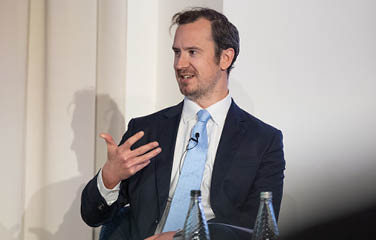
Rene Ho is the CFO of SAP Taulia