
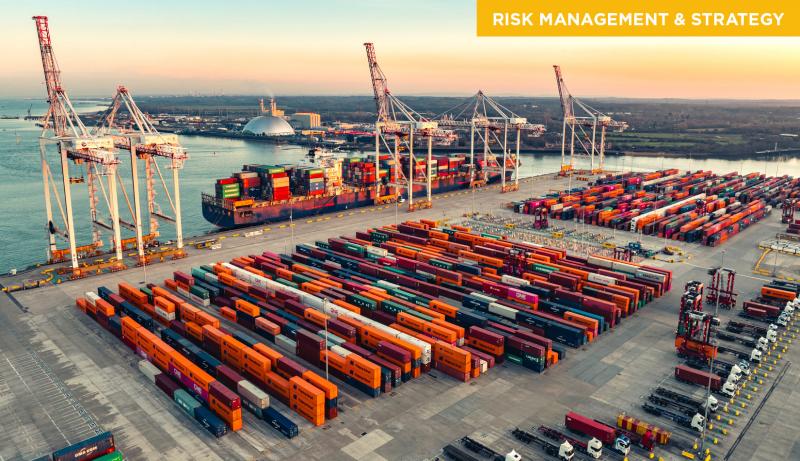
Corporate treasurers at commodity houses, industrial conglomerates with global supply chains, or retailers, dependent on imported goods, have uttered tentative sighs of relief at the Memorandum of Understanding between the US and Iran. It marks the beginning of the end of the blockage of the Strait of Hormuz, which for the past four months has delayed goods from reaching their buyers and sellers from getting their cash.
Commodity groups' free cash flow forecasts have been dramatically squeezed
Since February, insurance companies have cancelled or hiked the cost of risk cover. Freight rates have jumped higher as shipping capacity is taken out of the market and companies have had to tap larger bank lines, particularly groups needing to support the price spike in commodities – easy for large corporates but much tougher for mid and small caps with different risk profiles and often at the peak of their borrowing capacity.
Alexander Peters, group CFO at Switzerland’s Torq Commodities, the trading and supply chain management company, adds that commodity trading companies particularly have had to juggle new complexities and mismatches in their hedging strategies that has involved having to pay margin calls out of their own liquidity. “Commodity groups' free cash flow forecasts have been dramatically squeezed,” he says.
The crisis has shone an important light on the role of trade finance as a critical source of liquidity. Trade finance’s armoury of tools span revolving credit facilities to receivables financing, supply chain finance and inventory finance and these products have helped keep trade flowing and ensure companies continue to pay their suppliers despite delayed shipments, higher freights costs and supply chain re-routing.
Suppliers seeking stronger than usual payment assurances in response to the spike in volatility have leant into traditional letters of credit (LCs) as a safety mechanism that protects their cash conversion cycle, as well as products like trade credit insurance. Importers that had to shift to new suppliers also mitigated risk with LCs and bank guarantees, making it easier to establish new relationships in unfamiliar markets.
We see demand from Middle Eastern clients directly impacted by the Strait closure, and clients elsewhere in the world who are managing the consequences of the energy shock
Elsewhere, companies have tapped supply chain finance and receivable finance strategies to help finance their suppliers and ensure they are guaranteed delivery. Trade finance products have also secured inventory, allowing businesses to stockpile critical inputs at a time of scarcity. “Time is money in global trade, and companies that have seen their working capital deteriorate because of these delays have responded by drawing down additional liquidity and setting up new trade finance facilities in order to protect themselves through the crisis,” reflects Natasha Condon, global head of trade and working capital sales, JP Morgan Payments.
She adds that demand for liquidity products like simple trade loans to more structured working capital solutions has jumped, not just from companies in the Gulf region. “We see demand from Middle Eastern clients directly impacted by the Strait closure, and clients elsewhere in the world who are managing the consequences of the energy shock,” she says.
Condon concludes that financial institutions have not adjusted their lending or become more selective. “From JP Morgan Payments’ perspective, we were largely able to operate business-as-usual through the crisis. As always, we reviewed every transaction carefully and considered the route that every trade flow would take, whether by land or by sea. But the organisation came together to deliver for our clients when we needed to. Since the start of the conflict, JP Morgan has used its balance sheet and distribution capabilities to help raise more than US$20bn for clients affected by the conflict.
Sarah Rundell is a financial journalist writing across institutional investment, financial markets and corporate treasury