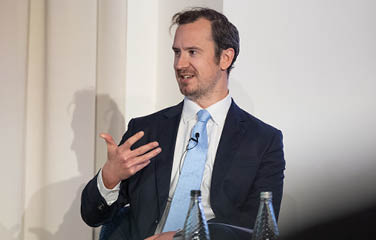

From 2008 until 2018, corporate treasurer Pedro Madeira worked on financing two of the UK’s largest infrastructure projects: the Heathrow Airport expansion, including the £2.5bn redevelopment of Terminal 2, and the £4.6bn Thames Tideway Tunnel, a 25-km deep-level sewer designed to transfer waste away from the River Thames.
For both projects, tax treatment affected cash flows, investor returns and the amount of debt the project could support. That experience is directly relevant to HMRC’s new Advance Tax Certainty Service, which launches in July.
The service will allow qualifying businesses to obtain clearance from HMRC on how tax rules will apply to a major UK investment project, from before the final investment decision until the relevant tax return is made. To qualify, the project must involve £1bn of UK expenditure over its lifetime.
Madeira, currently head of corporate finance at Impala Terminals, says the service would have been useful for projects such as Heathrow and Tideway because it could have helped treasurers, lenders and investors understand HMRC’s interpretation of the rules earlier in the financing process. But, he cautions that this is not the same as full tax certainty.
The service can clarify existing legislation, but it cannot prevent a future government changing the law. Therefore, treasurers should use the clearance service, but still build resilience into the capital structure.
I need to know what capex will be used on building the project, but also how much tax I am going to pay once it’s finished
In addition to construction costs and delivery timelines, Madeira says treasurers need certainty on cash flows. “I need to know what capex will be used on building the project, but also how much tax I am going to pay once it’s finished.”
He recommends preparing for scenarios in which tax assumptions move against the project, such as changes to debt interest deductibility or the loss of capital allowances.
“You should be comfortable that you have enough slack in your capital structure that you can absorb something of that magnitude… Never have an asset so close to the edge that if those allowable deductions get taken, then it can’t afford to service its debt.”
Madeira highlights the abolition of the Industrial Buildings Allowance (IBA) under Gordon Brown’s government as an example of tax policy affecting UK infrastructure funding.
The phased withdrawal of IBA, announced in the 2007 Budget, meant that Heathrow Terminal 2 “basically got no tax relief at all for the bricks and mortar,” says Madeira. The change affected the project’s financing, and ultimately meant the cost had to be passed on to passengers.
The lesson for treasurers is that current reliefs can disappear over the life of a long-term asset, and laws can be changed. The issue is not only whether the tax treatment is clear today, but whether the capital structure can withstand a less favourable tax environment in future.
HMRC clearance may help reduce uncertainty when major projects are being assessed, financed and approved
The £1bn threshold means HMRC’s service will only cover a short list of major infrastructure projects, such as Heathrow’s third runway, Sizewell C and HS2. Reducing this floor to £100m, Madeira suggests, could bring around 20–30 other contracts into scope.
From a treasurer’s perspective, HMRC’s service “locks the HMRC interpretation of existing legislation but doesn’t protect me against law changes”. If the government changes the law in a way that affects taxation, “then this [service] doesn’t give us certainty about that”.
For treasurers, the practical message is that HMRC clearance may help reduce uncertainty when major projects are being assessed, financed and approved. But it should not be considered as a guarantee that today’s tax assumptions will hold for the full life of the project.
Stephen Lynch is a business and finance journalist